Florida Organic Growers is the lead agency in the Southeastern region of the USDA sponsored Transition to Organic Partnership Program (SE TOPP). As part of our effort to get as many farmers and as many acres certified organic as possible, we are providing on-site technical assistance and opportunities for in-person feedback for program participants.
Our farmers span a wide geographic region, from the Carolinas across the Gulf Coast to Louisiana and into the Caribbean Sea in the US territories of Puerto Rico and the Virgin Islands, so this doesn’t happen all at once.
Southern Swing
Our first big tour of certified organic and transitioning-to-organic farms in 2026 happened in May, with our Southern Swing tour of SE TOPP participants and their farms throughout South Florida.
I headed south from my home in Crystal River on Saturday, May 9th, with a destination of Florida City. That was where I stayed overnight at a reasonable price, before a Mother’s Day visit with SE TOPP transitioning farmer Jackie Bello, at the Beautiful Truth Garden and Apiary in Key Largo.
A farm in Key Largo?
Yes, it is small but also very innovative, and absolutely eligible for organic certification under the National Organic Program (NOP).
While the property is just under a quarter acre, it had rainwater catchment and storage and systems, over 100 different varieties of edible and ornamental plants, and a real organic composting system, producing rich garden material at the proper temperatures to turn local food and lawn scraps into a high-quality garden soil amendment.
As a first-time visitor, the lush banana trees, egg laying chickens and fabulous outdoor kitchen and patio in the middle of the garden stood out as most exciting. The bees pollinating all of this were hidden away in a hive in a quiet nook, but when we peeked, you could see how active the bees were, and what an important part of the organic system they must be for all the flowering plants in the yard!
I sat down with Jackie and her husband Breaz to discuss their long-term plans for the farm, and how the organic certification process might work for and benefit them and their community. We discussed their dreams of hosting wonderful on-farm dinners where they could use everything from their garden and local fish to feed visitors curious to learn about what it means to grow and live in an organic system.
Jackie also hopes to use her garden as an example of what can be done in other spaces in the Keys, and I can easily imagine her parleying her family’s home garden into a larger business, designing and building other organic growing spaces for homeowners throughout this beautiful island chain.
As I drove out of the Florida Keys on my way to the next day’s visit at Organic Oasis in Palm City to the north, I thought how awesome it was to have such an opportunity to connect with all of these unique growers in South Florida who are using organic methods in such different ways.
Organic Oasis is a 4-acre certified organic seasonal vegetable farm developed and managed by two successful SE TOPP mentees, Sarah Glover and Laurie Scott. These two farmers worked quickly under the mentorship of Nick Batty, of Inyoni Farm in Naples, Florida, to develop their Organic System Plan (OSP) and get certified in 2025 by QCS, the Gainesville based certifier, and sister organization to FOG.
This farm is a real SE TOPP success story.
Sarah and Laurie wanted me to understand that they felt the organic certification process had been relatively easy for them, because they had bought half of a farm that was already certified organic. I would say they are very modest, because the only benefit they really get from that (besides some proper infrastructure) is the easy ability to avoid a lengthy transition from conventional land.
Farms that want to get certified organic must wait 3 years after an unallowed amendment is applied before they can harvest and sell crops as “Certified Organic,” but in the case of Organic Oasis they didn’t have to wait. Otherwise, Sarah and Laurie had to write a complete Organic System Plan and make a new application for inspection and certification just as any new organic farm would.
On my tour of Organic Oasis, I got to take photos of all of their raised bed growing systems, and the areas they have for expansion of their gardens, while we all talked about ways that Laurie and Sarah could grow their business beyond the CSA system they had developed as their primary way to market and sell the produce from their farm.
I was most happy really to visit Organic Oasis because I needed to thank these farmers for being such a great example of what a little technical assistance from an experienced organic farmer can do for transitioning growers through the SE TOPP Program.
Having thanked Laurie and Sarah for this good work, and for their valuable time in showing me their operations, I headed back south a bit to log my photos in my hotel room, and get ready for my next day’s trip to Harpke Family Farm in Davie.
Harpke Family Farm has a lot of fans among Florida’s Organic Farmers.
Maria Emerson, the business manager for Harpke Family Farm had contacted FOG through the SE TOPP web page looking for some advice. They wanted to find a permanent base for Tanner Harpke’s farm, and they were also looking to develop a better understanding of the organic certification process. Tanner is known for producing top quality sprouts, edible flowers and specialty citrus for fine restaurants and their chefs in Florida’s largest cities.
Nearly every farmer I told about this visit said something to me like, “Boy, I wish I could go visit there…they are awesome.” The reputation of this farm is one of high quality, efficient growing, and fantastic products marketed in the most exclusive settings at premium prices.
Tanner feels that the USDA organic label may not be super important for marketing direct to his chef clientele, but he and Maria recognize the value of the organic growing model, and also how the record keeping requirements of the National Organic Program can be an asset to the farm from a business standpoint. We discussed how they could use bar coding systems to keep track of everything from inputs to sales.
Currently, Tanner leases land for his operations in Davie and pays a lot more for that lease than he would like. They were looking for the best options for a long-term solution. Property values in South Florida felt out of reach, as 10 acres in that area could run into the many millions of dollars.
We discussed inland Florida agricultural real estate as a good option, as they could certainly find suitable land situated in the middle of their clients in Miami, Tampa and Orlando. Hundreds of former citrus groves along the Lake Wales ridge lie fallow, and while they would have a lot of work to do to move their operations, they are looking at that as a viable alternative to their current suburban location.
I left knowing that Maria and Tanner probably weren’t going to be pursuing certification in the near future, but also I knew that I had them thinking about how they would structure their operations once they make their big move, and I feel pretty secure knowing that when they do that, they will be setting up under the system to be organically certified to the NOP.
After stopping for an hour or so at the County Library to use the internet and attend a virtual meeting for work, I then headed towards Naples for my next day’s assignments. A visit to Nick Batty’s certified organic Inyoni Farm and the Southwest Florida Small Farmer’s Network meeting was on tap for the morning, following a good night’s rest. I knew that there, I would be among many folks who needed no convincing about the value of being certified organic.
Nick is an exceptional mentor at Inyoni Farm.
Nick is an imposing presence, but perhaps the most soft-spoken farmer I know. He has been amazingly successful in developing his family’s own farm into a local organic powerhouse. He has also successfully mentored five of our SE TOPP transitioning farmers, with three of them obtaining organic certification for their farms under his guidance. These farmers include both Laurie and Sarah from Organic Oasis, along with Shivani Sheinman from Life Farms, in Clearwater – another of the stops on this trip.
Nick also has a mentee in the Virgin Islands named Dese Maynard who has his own perennial food forest, and a second job working as the farmer for the St. Croix Teacher’s Association school farms. Nick spent several days very recently on St Croix working with Dese, and you’ll hear more about that in a later report.
Over seventy farmers and farm service agents gathered on that Wednesday at Nick’s farm to discuss organic agriculture, tour Nick’s operations, and eat a delicious lunch together under tents on the lawn. While it was Florida steamy in terms of weather, in terms of agricultural vibe, it was oh so cool.
It was there that I first met Noah Perrault in person. He’s another of Nick’s mentees, and the farm manager at an amazing property known as Cypress Creek Farms and Ranch, in Alva. Noah is soft-spoken like Nick, but slight of build like Tanner Harpke and lots of other organic farmers who often can’t figure out how to replace all the calories they burn during the busy season.
Cypress Creek is an amazingly well-designed operation for intensive agriculture.
Noah described his farm to me, and I was wowed at the diversity of operations. Pigs, horses, cattle, hydroponics, outdoor growing, high tech washing and packing, and state of the art greenhouses. I followed him to Cypress Creek after the farmer meeting and found out that he was not kidding. It was perhaps the most well-endowed farm I have ever seen in Florida in terms of the quality of the facilities.
Looking around though, there weren’t many people, and I immediately realized that Noah really had his hands full as a young grower. He had moved from Maine to Florida to attend a small university, so obviously he isn’t afraid of challenges and new things. The farm owner is in another industry altogether and relies on Noah to develop the farm operations to meet the dream of providing healthy local foods for their community.
Noah and I talked about how a farm like Cypress Creek should consider GAP certification along with organic certification to ensure the ability to market abundant crops at the wholesale as well as the retail level. Noah is working to grow their CSA model, which is the basis of their current marketing strategy, but I suggested to him that having GAP certification would ensure they could distribute all their produce, with minimal waste.
Grocers today require food safety assurances even more than a USDA organic label, so this advice is not just for Noah, but for all farmers growing on acre plus scales or greenhouse scale quantities of their main crops.
With the sun falling below the treetops, I bid goodbye to Noah and headed for a golden hour’s drive to Clearwater where I had an early appointment the next morning with the growers at Life Farms.
Life Farms is designing data systems for a sustainable urban farm’s future.
Shivani Sheinman is a volunteer at Life Farms, and one of their most loyal customers. She took on the responsibility of shepherding the full-time farm team of Mimi Houston, Bob Hummer and Rowland Milam through the organic certification process as an SE TOPP mentee. The extra bandwidth that Shivani had along with guidance from farmer Nick helped this farm efficiently navigate the organic application and they received their organic certificate from QCS in October, 2025.
The team at Life Farms was feeling a little overwhelmed by the record keeping responsibilities of the organic system, especially because they grow a lot of different products, and distribute in a variety of different ways. That all could potentially make tracking products for mass balance and traceback audits a real challenge, so I sat down with Shivani and the farmers in their office to discuss how they could best organize their data from seed purchase and planting through harvest to sales.
Again, I suggested a barcode tracking system, and together we considered the pros and cons of a variety of spreadsheet and data form options. Mimi demonstrated a knack for the process. She already had a good plan in place, and I found myself thinking that these farmers just needed some positive reassurance from another experienced farmer.
This was my kind of farm. On the edge of town, sprawling, with different things happening in every field over 6 organic acres of the Florida Gulf Coast. The office is an old house repurposed, as is the case on lots of small farms. We discussed their flower crops, their container grown strawberries and their sophisticated and clean packing area where they get everything ready for their CSA and other direct sales. I was only sad that the lush looking tomatoes on the trellises weren’t yet bearing ripe fruit.
“Can you ship organic produce by Uber?” The Life Farmers wondered aloud. “Does that count as organic?” The questions might make you laugh, but they are serious ones. Recent changes to the NOP require that all handlers of organic foods also be certified organic. But the Uber driver isn’t a certified handler, so what is the rule? Actually, as long as the organic products are in tamper proof containers (think sealed bags) then it is still “certified organic” when it reaches the end consumer. So the Uber delivery is ok, if the food is safely contained in a tamper proof package.
There is undeniably fraud occurring in food. People selling food labelled “organic” when it is not. This rule is meant to address this problem. Obviously, a small farm selling direct to customers is not a real threat to organic integrity. They are inspected every year by their certifier and they know their customers, and their customers can see how their food is grown because the farm is right in town. Nevertheless, all organic farms must essentially play by the same rules.
For a small farm like Life Farms, this means a lot of recordkeeping work for a few people, but I will tell you they have a handle on it all. And I can’t wait to eat some of their organic tomatoes!
I had a second appointment that afternoon – my seventh farm visit in five days – to the north in New Port Richey, and I’d be lying if I told you that I wasn’t first thinking about getting to sleep in my own bed in Crystal River that night. I had to turn down what sounded like a fabulous on farm lunch with Rowland, Bob, Mimi and Shivani to make the next stop on time, but I promised to return as a customer as soon as I could.
The crazy neighbors have a beautiful food garden at Theo’s Harvest.
I rolled into a classic Florida city neighborhood that afternoon, and as I pulled around the corner, I knew that I was someplace off beat and unique. From the 1950’s pickup truck parked in front of the beds of kale and garlic and a myriad other green crops in place of what would normally be Bermuda grass, to the wood framed house sitting in the middle of it all, I was immediately glad that this one old prime block of real estate hadn’t been re-developed into anything other than the neighborhood it has been for 50 years, with the exception of the development of the farm.
Tanner Kaufman is the proprietor of the place known as “Theo’s Harvest,” having made a deal a while back with Old Jim Kovaleski to buy the property, and continue what Jim had started as “Freedom House Farm” in 2007.
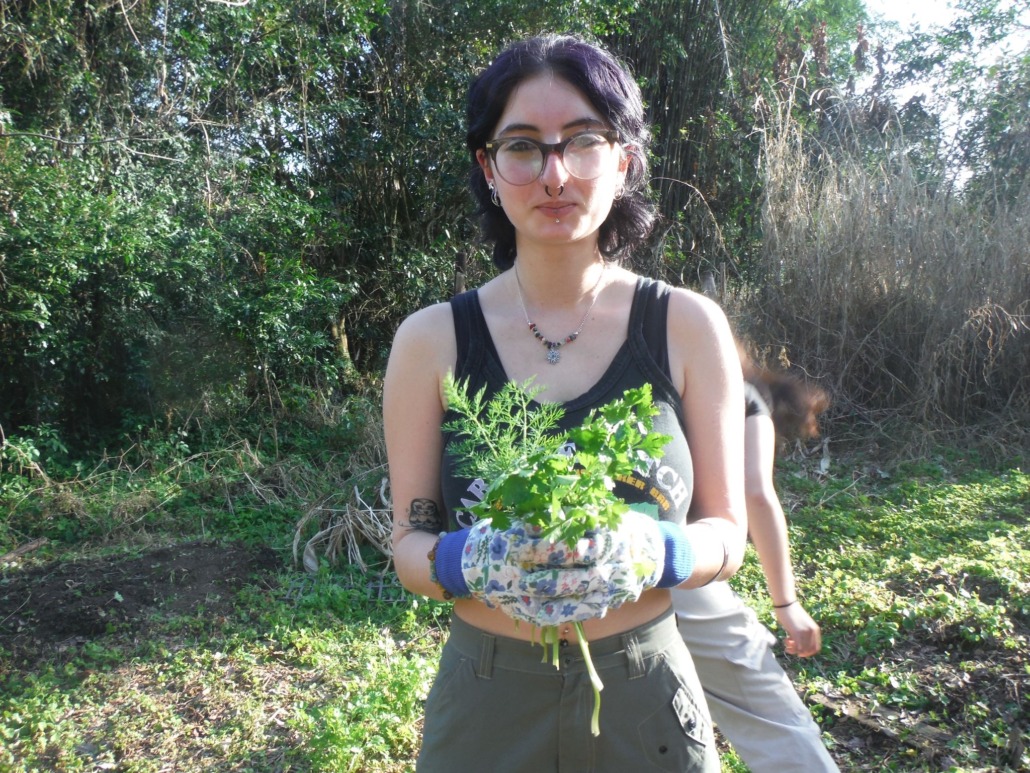
Tanner greeted me with a hearty smile as I found him picking and washing and packing greens – something he didn’t stop doing the whole time I was there. Tanner and his family have a half-acre corner lot on this block, and it is nothing but gardens, a packing station under shade, and the family’s home.
A volunteer and SE TOPP mentee named Ben Stony introduced me to Tanner and had set up the meeting. I thought that I’d find Ben there at the farm helping out, but Tanner let me know that Ben had recently moved on to other projects, and so now there wasn’t anyone to help with the organic certification process that Tanner was considering for the farm.
Tanner also has a larger rented piece of land a little farther north in Spring Hill where he grows a lot more food, as he and his customers’ demand had outgrown the gardens around the house, but the centerpiece of the operation was still this old house and its corner lot.
We discussed Tanner’s growing methods, the organic nutrient products he used, his customer base, and how organic certification might fit into the whole operation. The little USDA label might not help with sales in the neighborhood, but if Tanner wanted to attract new customers from a wider geographic area, it would be a great asset to have for increasing the farm’s market share of produce sales in the area.
Tanner was the busiest of all the farmers I met during this trip, so I didn’t stay too long. As a farmer myself, I knew he must be feeling a bit pressed, having committed a certain amount of that food to be harvested and distributed that afternoon. I waved good-bye to another amiable fellow working in the garden as I got into my car and headed home along the Suncoast Highway to that lovely manatee haven on King’s Bay which I call home.
Before settling in for the night, I uploaded the last of my photos to the shared drive we use here at FOG, so that we would have a good record of what this important farm looks like right now in 2026.
I hope the yard doesn’t look too different 10 years from now, and that Tanner has success at growing 10 times more food on the parcel in Spring Hill. Hopefully, I can get out there soon to see that other piece of farmland and help Tanner write his OSP and get certified organic.
FOG staff then went island-hopping to continue the work.
Two months after this Southern Swing through South Florida farms, the SE TOPP 1 on 1 TA visits from FOG continued at the most remote farms in the Southeast region– on St. Croix in the Virgin Islands.
Watch out for the next installment in this series to learn about how farmers in the territories are trying to re-develop a food system from the past which has been lost to modern communities. Today, the US Virgin Islands import 97% of the food consumed there, but historically St. Croix Island was the breadbasket of the region. FOG and our local partners there are working to help bring it back, as certified organic agriculture.
Until next time,
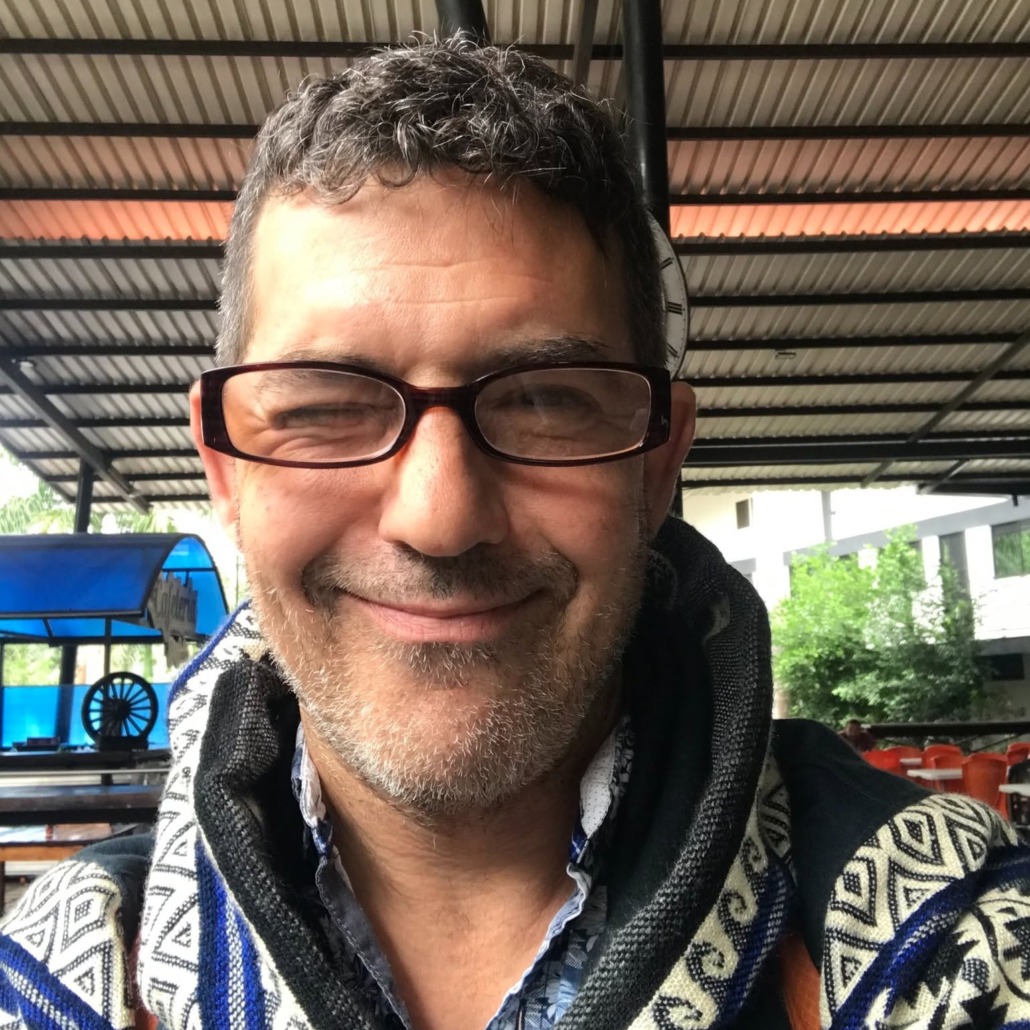
Sebastian Interlandi – SE TOPP Technical Assistance Specialist – Florida Organic Growers