Gaining New Ground Webinar Series Through the generous support of RAFI‑USA, Florida Organic Growers (FOG) continues the Gaining New Ground Initiative—a program designed to equip aspiring and expanding farmers with the knowledge and tools needed to build resilient agricultural businesses in Florida. The third webinar in the series, “Legal Considerations for Organic Agricultural Land Use,” […]
Gaining New Ground: Webinar 1 Recap
There are many challenges involved in starting or expanding an agricultural business — and one of the most significant is securing suitable land, formally known as land tenure. Thanks to the generous support of RAFI‑USA, Florida Organic Growers has launched a forward‑thinking, visionary new program: the Gaining New Ground Initiative. This effort is designed to help aspiring farmers and those seeking to grow their operations overcome barriers to land access and move toward long-term success.
The first phase of the Gaining New Ground Initiative features a three‑part educational webinar series addressing key challenges facing today’s farming community:
- Understanding Land Tenure Options for Florida Organic Farmers
- Organic Certification as a Gateway to Unlocking New Market and Sales Opportunities
- Legal Considerations for Organic Agricultural Land Use
To bring these topics to life, we invited highly knowledgeable educators and professionals to share insights from their decades of field experience.
Our first webinar, Understanding Land Tenure Options for Florida Organic Farmers, was led by Dr. Tamara Cushing of the UF/IFAS Extension Program. Dr. Cushing provided a comprehensive overview of the various forms of land tenure available in Florida and offered practical guidance for navigating each option. She was joined by Chris Demers, a veteran IFAS Extension Manager with more than 25 years of experience working directly with Florida farmers and landowners. Together, they delivered an impressive amount of highly relevant and timely information in a concise one-hour program, followed by a thoughtful audience Q&A.
We invite you to take advantage of this valuable opportunity to gain a clear, accessible understanding of land tenure options across Florida. The series was designed with the busy farmer in mind, offering actionable knowledge without overwhelming your schedule. You’ll walk away with a strong grasp of the land tenure landscape — and the opportunities available to help you become part of the growing Florida agricultural community.
Watch the webinar here:
If you find this resource helpful, please consider subscribing to the Florida Organic Growers YouTube channel. Your subscription ensures you’ll be notified when our next video is posted — and it helps us reach more growers, advocates, and community members across the state.
Thank you for your continued support of our mission to expand access and opportunity for aspiring and existing farmers.
We all need to eat — go organic!
Gaining New Ground Post‑Webinar 2
Through the generous support of RAFI-USA, Florida Organic Growers (FOG) continues the Gaining New Ground Initiative—a forward-thinking program designed to equip aspiring and expanding farmers with the knowledge and tools needed to build resilient agricultural businesses.
Webinar #2 in this three-part series, “Organic Certification as a Gateway to Unlocking New Market and Sales Opportunities,” focused on a powerful idea: organic certification is not simply a label—it is a strategic pathway to market access, price premiums, and credibility resulting in long-term farm viability and resilience.
Certification: More Than Compliance
Stephanie Jerger, Vice President of Operations at the Organic Trade Association (OTA), opened the session with a clear overview of the certification process under the USDA National Organic Program (NOP). She emphasized that certification provides a nationally recognized, third-party verified standard that builds trust across the supply chain—from seed to shelf.
For transitioning farmers, the three-year transition period can feel daunting. However, as discussed in the webinar, many producers are already using organic practices and may be closer to eligibility than they realize. Developing a strong Organic System Plan (OSP), choosing an accredited certifier, and preparing for inspection are structured, manageable steps when approached systematically.
Importantly, certification is not only about regulatory compliance—it is about creating market credibility.
From Certification to Sales Growth
The McLean family of Mclean Family Farms and Uncle Matt’s Organic shared how certification became the foundation for building the nation’s leading organic orange juice brand. As multi-generational Florida growers, they explained that organic production allowed them to differentiate in a crowded marketplace and move from being “price takers” to “price makers.”
Organic certification opened doors to:
- Retail partnerships with major grocery chains
- National brand recognition
- Export opportunities
- Media visibility and community engagement
They also highlighted the importance of direct consumer connection—through farm tours, U-pick operations, and educational outreach—which strengthened trust and built brand loyalty.
Market Opportunity Is Real
Organic is no longer niche. The U.S. organic market now exceeds $70 billion annually, with approximately 80% of U.S. households purchasing organic products regularly. Retailers—from natural food stores to mainstream chains—continue expanding organic offerings to meet consumer demand.
Consumers increasingly seek:
- Transparency and traceability
- Reduced pesticide exposure
- Environmental stewardship
- Nutrient-dense food
Certification positions farmers squarely within that growing demand.
Overcoming Barriers
Cost-share programs and technical assistance remain critical supports for producers pursuing certification. While funding timelines can fluctuate, FOG and OTA continue advocating to ensure that certification remains accessible to small and transitioning farmers.
Speakers also underscored creative entry strategies: leasing land, partnering with existing infrastructure, and building gradually while reinvesting profits.
Moving Forward
Webinar #2 reinforced a clear message: organic certification is a gateway—it differentiates your product, strengthens your credibility, and expands your access to premium markets.
If you missed the live session, we encourage you to watch the replay on the FOG YouTube channel:
Please take a moment to subscribe to the channel so you are informed when the next video is available. Ask questions or add comments on the channel—your feedback helps us continue serving Florida’s farming community effectively.
Thank you for being part of the growing movement to strengthen organic agriculture in Florida.
We all need to eat. Go Organic!


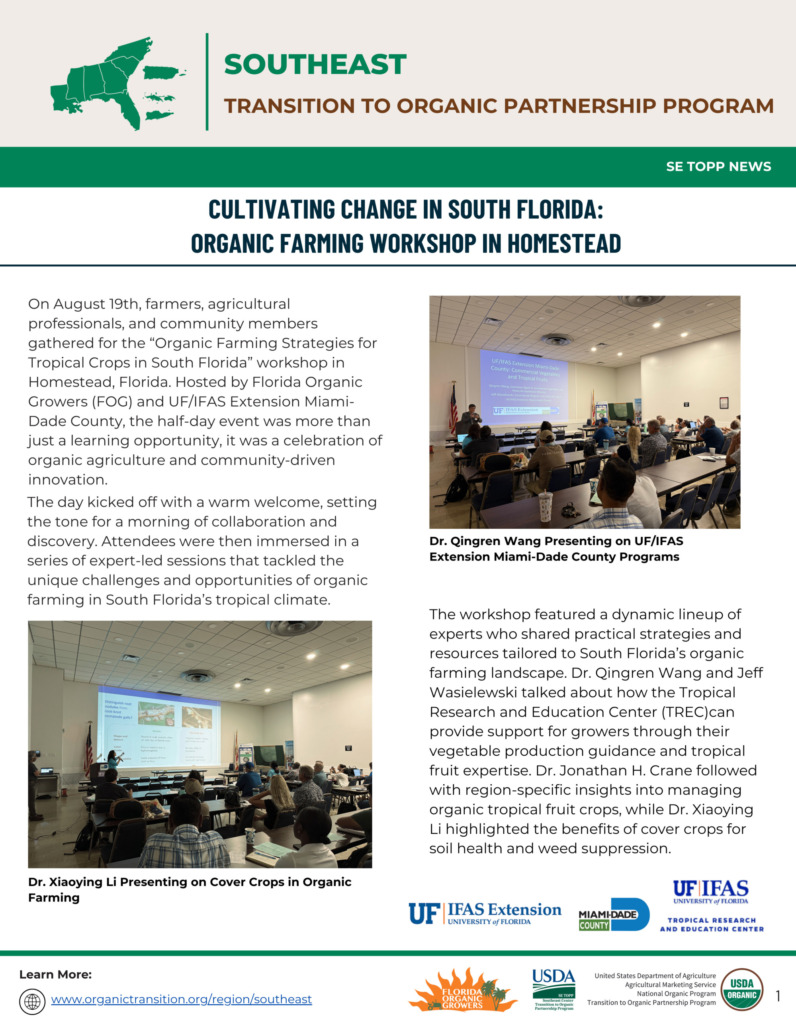
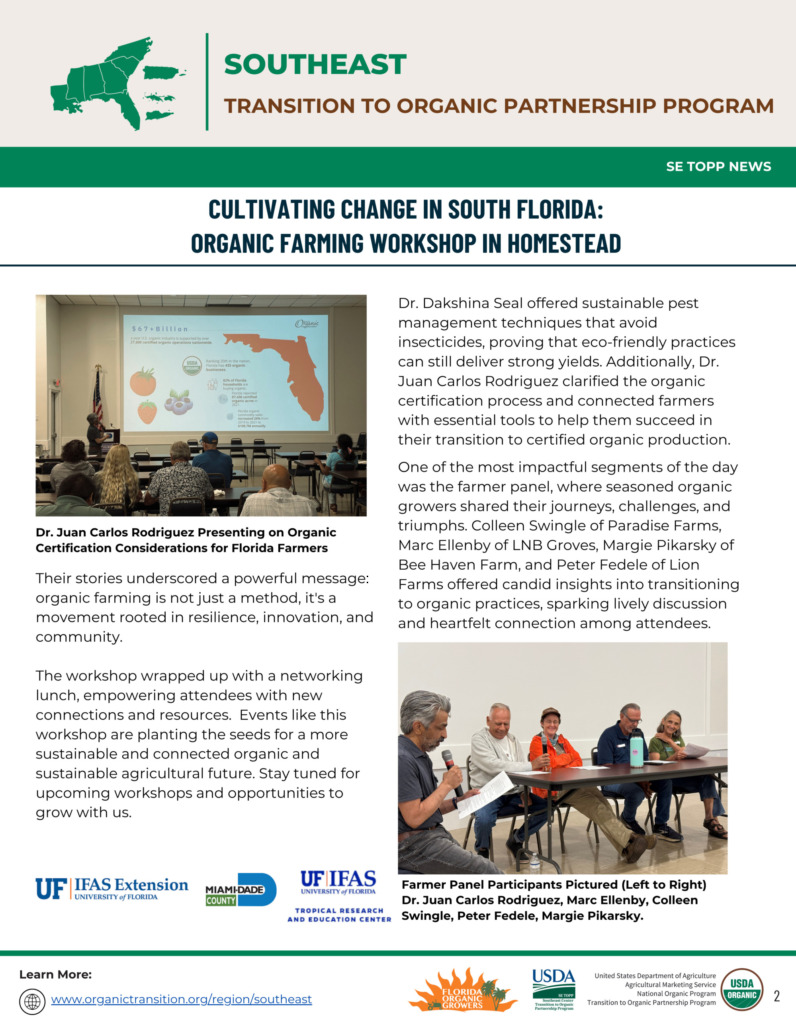
Growing Connections: How Stone Fruit Field Day Sparked New Paths for Organic Agriculture in Florida
At the University of Florida IFAS Stone Fruit Field Day, Florida Organic Growers (FOG) didn’t just set up a booth—we built bridges. The event brought together farmers, researchers, and agricultural leaders, and FOG was at the heart of it all, connecting people with the resources they need to grow organically and sustainably.
Among the highlights were three Department of Agriculture field agents who stopped by to express their appreciation and interest in FOG’s work. Their enthusiasm and request to join our mailing list reflect a growing demand for accessible, credible guidance on organic certification across Florida’s farming communities.
In Marion County, Extension Agent Mark Bailey stood on the only certified organic farm in the region and declared, “We need to change that.” His openness to presentations, farm visits, and collaboration with FOG marks the beginning of a promising effort to expand organic agriculture in the area.
Meanwhile, Columbia County’s new Extension Agent, Derrick Conover, is already making waves. Focused on pollinators and eager to learn more about organic practices, Derrick invited FOG to present at his next Extension Agents Meeting—offering to sponsor the meal to make it happen. His proactive approach signals a new chapter of partnership and education.
One of the most inspiring moments came from a military veteran and her husband, who are transforming 20 acres of neglected land into a regenerative farm. Trained through the Veterans Staybridge program, they’re exploring organic certification and looking to FOG for mentorship and support. Their journey from service to soil is a powerful reminder of the healing and purpose that farming can offer.
These stories are more than snapshots—they’re signs of a movement. With continued outreach, collaboration, and education, FOG is helping shape a future where organic farming thrives across Florida’s diverse agricultural landscape.
OUR MISSION
Florida Certified Organic Growers and Consumers, Inc. (FOG) supports and promotes organic, regenerative, and sustainable agriculture.